Kallah & Mikvah
The Kallah Beauty Timeline: From Engagement to Sheva Brachot
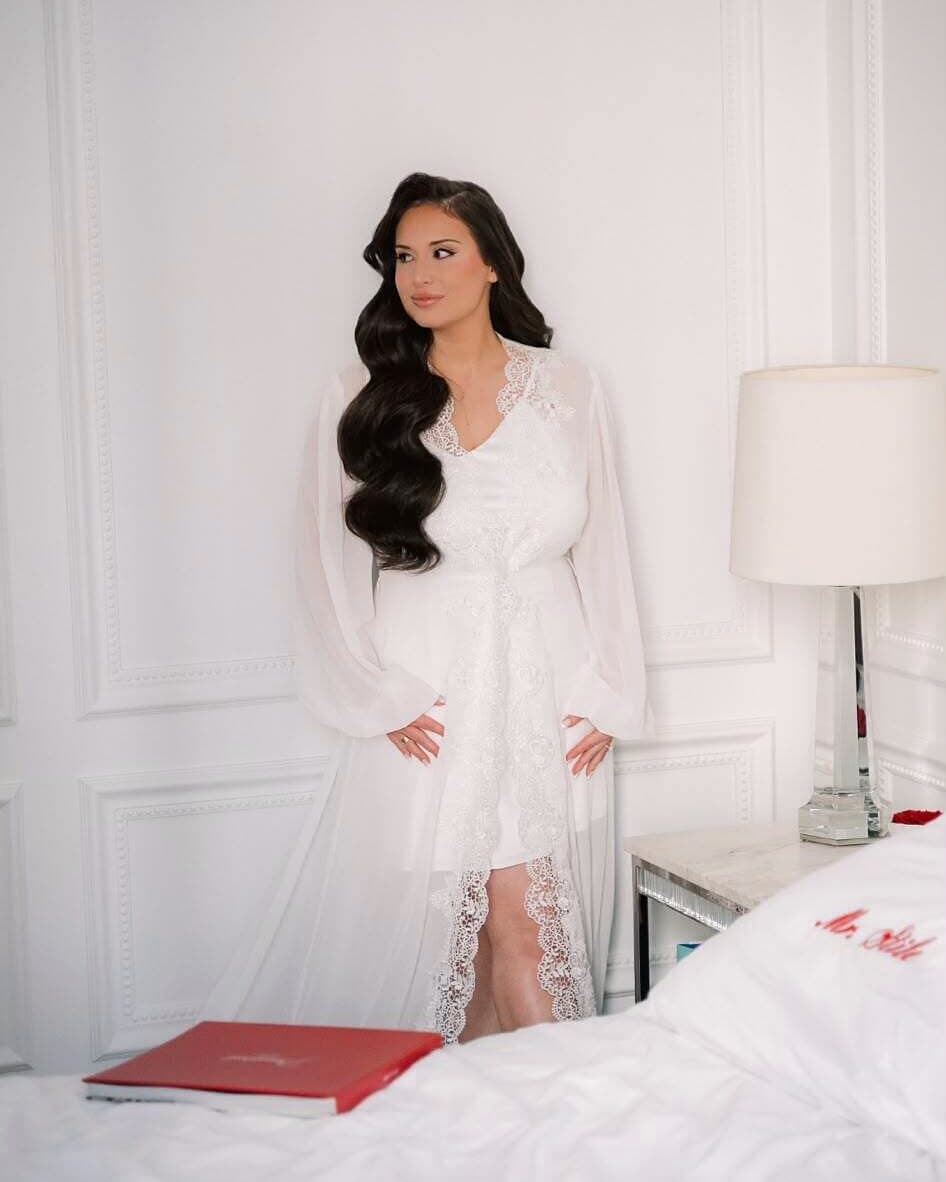
A kallah’s beauty timeline runs on two clocks at once: the wedding calendar and the mikvah calendar. Book your trial tan four to six weeks out, let your kallah teacher set your tevilah night, put the wedding tan on two days before the chuppah (ideally after tevilah), and plan a light top-up halfway through sheva brachot.
Everything else (the l’chaim, the henna or the swanee, the Shabbat kallah, the nails, the brows, the hair) hangs off those four points. This guide walks the whole engagement in order, from the night of the vort to the last sheva brachot, with the spray-tan decisions marked at each stop. It is written for kallahs in Midwood, Flatbush, Ocean Parkway and Deal, Sephardi and Ashkenazi alike, and for the mothers and sisters who are usually the ones holding the calendar.
One thing up front. Nothing here is a halachic ruling. Where the mikvah or Shabbat comes into it, we tell you what published sources say and who to ask. Rosie is shomer Shabbat and has been spray tanning for more than ten years. Her rule is simple: ask your kallah teacher or rav, and Rosie will build the schedule around whatever they tell you.
The timeline at a glance
- Engagement (week 0). Vort, l’chaim or engagement party. A quick tan or a face-only glow if you want one.
- Setting the date. Check the date against Sefirah, the Three Weeks and Yom Tov. Book Rosie and put down the $150 deposit.
- Kallah classes (about 2–3 months out). Bring your tanning questions to your kallah teacher early.
- Trial tan (4–6 weeks out). Test the shade against your gown and your makeup.
- Pre-wedding events (1–2 weeks out). Henna, swanee, Shabbat kallah, aufruf or sebet.
- Tevilah (in the final days). Your night comes from your kallah teacher, not from us.
- Wedding tan (2 days out). Timed so the wedding falls on Day 2 of the colour.
- Sheva brachot (the week after). Gentle care, and a light top-up midweek if you want one.
If you want this as a booking calendar rather than a reading guide, the kallah spray tan timeline page lays out each appointment, its length and its price in one table.
Engagement: the vort, the l’chaim and the first photos
Engagements in our community move fast. A couple can get engaged on a Tuesday and have a l’chaim in a living room on Ocean Parkway that same night, with a bigger vort or engagement party a week or two later. In many Ashkenazi families the vort is the main engagement event; some families also hold tenaim. Sephardi and Syrian families often host an engagement party under their own names and in their own style. Whatever it is called in your family, it is usually the first time you are photographed as a kallah, and you get very little warning.
Tanning for a short-notice engagement
The ideal is still the Day-2 rule: a tan looks most natural about two days after it goes on. But you will not always have two days. If the l’chaim is tonight, it is better to skip the full tan than to show up in the bronzer stage. If the vort is in a few days, a full Spray Tan ($100, about 20 minutes) the day before or two days before works well. If you only want your face and neck to match the photos, a Face Only tan is $50 and takes about 15 minutes.
Call or text Rosie at (917) 326-0303 as soon as you know. Short-notice appointments are often possible Sunday through Thursday, but Fridays end an hour before sunset and wedding season fills up.
Setting the date: the wedding calendar
Before anyone talks about shades, the date has to be set, and the Jewish calendar has opinions. Many communities do not hold weddings during parts of Sefirat HaOmer or during the Three Weeks, and the customs differ between Ashkenazim and Sephardim and between families. Weddings are not held on Shabbat, Yom Tov or Chol HaMoed. That is why the weeks right after Lag BaOmer, after Shavuot, after Tisha B’Av and after Sukkot get so crowded.
We go through the 2027 dates and the Ashkenazi and Sephardi customs in our guide to Shabbat, Yom Tov and wedding-season tan timing. The short version: as soon as your date is set, book Rosie. A bride’s date is held with a $150 deposit. Changes need at least 24 hours’ notice, and a bridal deposit is forfeited for cancellations inside 24 hours. Full wording is on the policies page.
What to book now, not later
- Your wedding tan. Two days before the wedding, at a time that works around your tevilah (more on that below).
- Your trial. Four to six weeks out. Bridal trial, $120.
- Your family. Mothers, sisters, mechutanot and friends at $120 per person for the bridal party. Larger family plans and packages are quoted individually.
- Any summer date in Deal. Rosie serves Deal and the Jersey Shore by appointment, and summer weekends there go first.
Two to three months out: kallah classes and your questions
Most kallahs start learning with a kallah teacher in the months before the wedding. This is the right moment to raise anything beauty-related that touches the mikvah, while there is still time to plan. Your teacher knows your community and your family’s practice; a spray-tan artist does not, and should not pretend to.
Questions worth writing down for that conversation:
- Is a developed spray tan (the kind that works through DHA in the skin) a concern for my tevilah?
- If my tevilah ends up close to the wedding, may I have the tan before it, and if so, what should I check first?
- What about the cosmetic “guide colour” that washes off in the first rinse, and any tanner around my nails, cuticles or hairline?
- Is there anything in our custom about showering or rinsing after tevilah that I should plan around?
- How should I time nails, waxing and brows around my tevilah?
For background before that conversation, our article on spray tan before the mikvah summarises what Yoatzot Halacha and DIN Online have published, with links to the original answers. Rosie can also tell you exactly what is in her solution and how the guide colour washes off, so you can pass the details to your teacher or rav.
Skin in the meantime
Keep things boring. This is not the season to try a new peel, a new retinoid or a first-ever facial. If your skin is giving you trouble (eczema, breakouts, a reaction to something new), see your dermatologist now rather than in wedding week. Moisturise daily, and drink water for its own sake rather than for your tan.
Four to six weeks out: the trial tan
The trial is where most of the real decisions get made. Book it four to six weeks before the wedding. That is far enough from tevilah week that there is no question of overlap, and close enough that your skin, your season and your gown are what they will be on the day.
What to do with your trial:
- Bring the dress, or at least a photo of it in daylight. A bright white gown and an ivory gown pull different undertones forward. Rosie custom-blends the shade for your skin and your dress.
- Live in it for three days. Look at it on Day 2 and Day 3, not the evening of. The Day-2 phenomenon explains why the first night always looks too dark.
- Do a makeup trial in the same window. Tell your makeup artist you will be tanned on the day, so she can match your foundation to the tan rather than to your untanned skin.
- Take honest photos. Daylight by a window, and one with flash. Wedding photographers use both.
- Note how you prepped. Exfoliating and shaving about 24 hours before your trial tells you what to repeat for the real one.
If you want to go lighter or deeper, the trial is where you say so. More detail on what to expect is on the bridal spray tan trial page.
“The trial is a rehearsal for the colour, not a test of your nerves.”
One to two weeks out: henna, swanee, Shabbat kallah, aufruf
This is where customs diverge most, so it is worth naming them carefully.
- Henna. Strongly associated with Moroccan, Yemenite, Iraqi and other Mizrahi and North African families, and held by many Sephardi and mixed-heritage couples. It is not a universal Syrian custom, and families who hold one time it in different ways: often shortly before the wedding, sometimes after.
- Swanee. A Syrian custom: a display of gifts for the kallah, traditionally from the chatan’s family, now often combined with a shower.
- Sebet and Shabbat kallah. In Syrian families the sebet celebrates the chatan on the Shabbat before the wedding, and many families also gather women and friends around the kallah that Shabbat.
- Aufruf. The Ashkenazi custom on the Shabbat before the wedding. Many Sephardim honour the chatan on the Shabbat after the wedding instead.
Can one tan cover the henna and the wedding?
Usually not well. A tan looks its best around Day 2 and starts to fade after about a week, so a tan for an event at the start of the week will be tired by a wedding at the end of it. The two common plans are a tan for the earlier event plus a fresh wedding tan, or skipping the tan for the earlier event and saving everything for the wedding. Whichever you choose, any plan that leaves tan on your skin at tevilah should be cleared with your kallah teacher first.
If henna is part of your week, the order matters too: henna first, tan after, with care around the hennaed skin. We go through it step by step in henna and spray tan: order and timing, and the service details for henna nights, l’chaims and sheva brachot are on the henna and sheva brachot spray tan page.
Waxing, nails and brows
For any tan, finish waxing or other hair removal at least a day before and exfoliate about 24 hours before. In wedding week, though, these appointments also have to fit around your mikvah preparation, which includes your nails. Many kallahs leave the manicure until after tevilah. Ask your kallah teacher how she wants you to sequence it, then book the rest around her answer.
Tevilah week: where the mikvah fits
Your tevilah night is set with your kallah teacher. The accepted custom is that a kallah may immerse up to four nights before the wedding, and the exact night depends on her own cycle. Rosie never asks about that, and neither should any artist. All she needs is the night, or even just “before” or “after” a given day.
Published sources such as Yoatzot Halacha and DIN Online have written that a developed DHA spray tan is generally not considered a chatzitzah, with cautions about evenness, stray residue and any wash-off cosmetic layer. For a kallah, Yoatzot’s practical suggestion is to immerse first and tan afterwards. Practice still varies, and some teachers are more careful about a kallah’s first tevilah. Every kallah should confirm with her own kallah teacher, rav or yoetzet halacha.
When tevilah comes first (the common plan)
If your tevilah is three or four nights before the wedding, the timing falls into place. You immerse, and your wedding tan goes on the next day or the day after, two days before the chuppah. For a Sunday-night wedding, that might mean tevilah on Wednesday or Thursday night and the tan on Friday morning (in summer) or Thursday (in winter, when Shabbat comes early).
When tevilah is very close to the wedding
If your tevilah is the night before, or two nights before, tanning after it would put you on Day 0 or Day 1 at the chuppah. Then you have a real choice to make, and it is your kallah teacher’s or rav’s call, not ours. Options kallahs bring to their teachers include a tan two days before with careful preparation (full first rinse, no guide colour left on the skin, nails and cuticles clean), or no tan for the wedding at all. Rosie will plan either one.
Two days before: the wedding tan
This is the appointment the whole timeline was built around. A spray tan develops over about eight hours, the first rinse comes after that (lukewarm, no soap), and the colour looks most natural on Day 2. So the tan goes on two days before the wedding.
- Exfoliate and shave about 24 hours before, not the morning of.
- Arrive with clean, dry skin: no lotion, deodorant, perfume or makeup.
- Wear something loose and dark. In the studio you choose your own coverage, and disposables are available.
- Rinse after the colour has developed, pat dry, and moisturise daily from then on.
For the wedding itself, consider the Spray Tan + ($150, about 35 minutes). It adds prep and contouring time and comes with a take-home kit (tan-safe soap, tan extender and natural lotions), which becomes useful again during sheva brachot.
Shabbat in the middle
Many weddings in our community are on Sunday or a weeknight, so Shabbat often lands between the tan and the chuppah. Rosie is shomer Shabbat and the studio is closed Shabbat and Yom Tov. Friday appointments end one hour before sunset, and the plan should let your first rinse happen before candle lighting so nothing about your aftercare falls on Shabbat. In winter that usually means a Thursday tan. Our guide to spray tan timing before Shabbat and Yom Tov walks through the hours.
The morning of
Leave your tan alone. No new products, no scrubbing, and moisturiser only where your makeup artist is happy with it. Your tan should be in its settled, Day-2 state when the photographer arrives.
Your mother, your sisters, your mechutanot
A wedding tan is rarely just for the kallah. Mothers, sisters, grandmothers and the chatan’s side often book together, at the Midwood studio or, for groups of five or more, on location in Brooklyn or Deal.
- Unmarried sisters and friends can simply book for the best cosmetic timing, one to two days before.
- Married women in the family may have their own mikvah night that week. Nobody will ask. If you have one, just tell Rosie a day to work around, and ask your own rav or yoetzet if you have a question about it.
- Mothers and grandmothers often want a softer, more natural shade. Rosie blends for each person rather than giving the whole party one colour.
Bridal party tans are $120 per person; larger family plans are quoted individually. Mobile and on-location bookings have a five-person minimum.
Sheva brachot: keeping the glow all week
Sheva brachot runs for seven days of festive meals after the wedding, often with a Shabbat sheva brachot in the middle. Your wedding tan went on two days before the chuppah, so by the last night it is nine days old, near the end of the 7–10 days a tan typically lasts.
Two things help. First, gentle care: lukewarm showers, a tan-safe soap, moisturiser every day and no scrubbing. Second, an optional light top-up around the middle of the week, timed so it is settled for the meals you care most about photographing. Some kallahs only want their face and neck refreshed; others prefer a full light layer. The full plan, including how to work around a Shabbat sheva brachot, is in keeping your glow through sheva brachot.
The whole plan on one page
- Week 0: engagement. Face Only ($50) or a full tan if there is time.
- Date set: check Sefirah, the Three Weeks and Yom Tov; book Rosie; $150 deposit.
- 2–3 months: kallah classes. Ask your tanning questions.
- 4–6 weeks: trial tan ($120) plus makeup trial.
- 1–2 weeks: henna, swanee, Shabbat kallah, aufruf. Henna before any tan.
- Tevilah: the night your kallah teacher gives you.
- 2 days before: wedding tan, rinse before candle lighting if Shabbat is in between.
- Sheva brachot: gentle care; optional midweek top-up.
The full service page for kallahs, with how the private studio works and how bookings are handled, is kallah spray tan. When you are ready, call or text Rosie at (917) 326-0303. Tell her the wedding date, roughly when your tevilah falls, and who else is coming. And for anything that touches the mikvah or Shabbat: ask your kallah teacher or rav, and Rosie will build the schedule around whatever they tell you.
Quick answers
When should a kallah start planning her beauty schedule?
As soon as the date is set. Book the wedding tan and trial early, then fill in the rest once your kallah teacher has helped you work out your tevilah night.
Should a kallah get her spray tan before or after the mikvah?
The widely cited preference from Yoatzot Halacha is tevilah first, then the tan, which also suits the two-days-before timing. Practice varies, so ask your kallah teacher or rav. Rosie will build the schedule around whatever they tell you.
How far before the wedding should a kallah do a trial tan?
Four to six weeks before. That leaves time to adjust the shade and keeps the trial well away from the week of your tevilah.
Will one spray tan last from the wedding through sheva brachot?
Usually not at full strength. A tan lasts about 7–10 days with care, and it is past its peak by the second half of the week, so many kallahs book a light top-up midweek.
Everything in Kallah & Mikvah
- Spray Tan Before Shabbat and Yom Tov: A Timing GuideEight hours to develop, one rinse before candle lighting, and a wedding calendar shaped by Sefirah and the Three Weeks. The shomer-Shabbat timing guide.
- Spray Tan for Sheva Brachot: Keeping Your Glow All WeekYour wedding tan peaks on the night of the chuppah and fades by the last sheva brachot. Here is how to keep it even all week.
- Spray Tan Before the Mikvah? What Kallahs Should KnowWhat the published sources say about spray tans and tevilah, why tevilah-then-tan is the common plan, and the questions to bring to your kallah teacher.
- Henna and Spray Tan in the Same Week: Order and TimingHenna first, tan second, and a little care around the design. Here is how to plan a henna night and a wedding tan in the same week.
Like the read?
Book a tan with Rosie.
Keep reading
Spray Tan Before Shabbat and Yom Tov: A Timing Guide
Eight hours to develop, one rinse before candle lighting, and a wedding calendar shaped by Sefirah and the Three Weeks. The shomer-Shabbat timing guide.
Read
Spray Tan for Sheva Brachot: Keeping Your Glow All Week
Your wedding tan peaks on the night of the chuppah and fades by the last sheva brachot. Here is how to keep it even all week.
Read